I’ll make some calls

Microsoft Copilot. (2024). Old-fashioned telephone on a prestigious writing desk in an administrative office [Generated image].

I’ll make some calls, he said and waved his hand at me. Or did I make up the last part? Was he waving? In any case, I got it.  After – it can have only been – 45 seconds,  he asked Me to leave. Do people still say that: I’ll make some calls … He didn’t even have a phone on his desk anymore.  All Zoom these days. Was he old enough to remember that offices used to have a phone line?  And a fax machine? I didn’t even have time to look around his office. Did he have a fax machine still? Did he have his own printer? If the person was important enough, he used to have a fax machine and a printer and later a three-in-one. Or was that two? I’ll make some calls!?! Had he been more important, the fax and phone would be in the front office.  And he would only call them to tell them who they must call to then call him so that he could call them. To call to call, to call to call, to call.

I walked out of his office. The chair in the corridor was no doubt still warm from my waiting. I calculated the rate of waiting time to talking time in my head. I was good at math. Better than the corrupt election machines. One to twenty. I had waited fifteen minutes to talk for less than a minute. What a waste of my taxes. Why did I come here? I’ll make some calls. Oh ya, sure. Make your bloody calls! Did I say this out loud? Was this suit, who just walked by, looking at me?  Are you looking at me? I’ll make some calls. I. Will. Make. Some. Calls. My battle cry echoed in the long corridor. I will call. I took out my cell and waved it like a torch. I will make some calls. Does anyone have the number of the boss of this shit hole here? Oh come on, give me the number of your retarded boss. I will call him. Right now. Stop staring at me. Look somewhere else. Don’t you have any work to do? Ach, waste of time. I will make some calls … and start with the President. I will call him. He will pick up. He is like me, he likes to talk. He likes his burgers. And diet coke. So American. I will make some calls. Oh no, I will only call one man. The man. He will make it right again. He will make one call to this jerk.  Lock him up. And there will be peace.  And respect.  And then this Crooked Office John can’t make any calls anymore and can’t have anyone in his office for 45 seconds. For the next 45 years. Enough already …


I have not been posting texts for far too long, I think and hope you agree, but I have been writing. This is from a session this week and the prompt was – you guessed it – I’ll make some calls.

Still

Photo by Domenico Farone on Pexels.com
Noch
17. Januar 1991  

Schuhe noch nicht zu-
gebunden schlugen Bomben 
meinen Schlafkopf Morgen 
peitschte Radiowellen
Sündengeißen treiben  

Seit Uhr wird ge-
schlagen
heilige Schlacht 
Moscheen scheinen
Wunderlampen Öl ver- 
siegt Himmel dämmert 
Abbruch  

Noch …
Still
January 17, 1991  

Shoelaces still not 
tied bombshells beat
my dream head morning
whipped radio waves
scape nannies stay afloat  

Since a.m. we are
blasting back holy war 
mosques queer
magic lamps oil runs 
dry sky dawning 
abruption  

Still … 

I have rediscovered this poem, which I wrote in German on January 17, 1991. I woke up that morning and found a note on top of two library books: Could you return the book on top and renew the other one? Thank you. PS: You might not want to turn on the radio. 

This is a text for my year-long online writing course Uncovering the Authentic Self on dailyom.com. The prompt was rediscovery. Previous texts are on Home and Giving.
Rediscovering this poem, editing it a bit, and translating it into English today reminded me that I only wrote poetry again twenty years after in 2011.

Is this working?

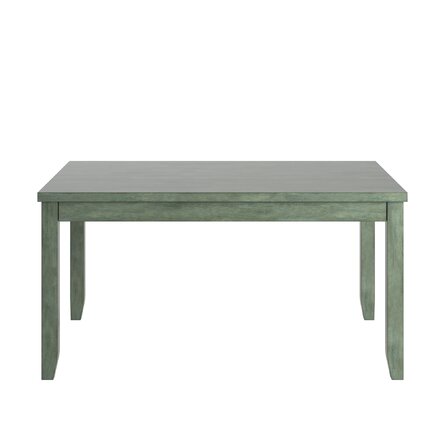
Uwe told me that it was a great way to make money. I was all ear. Money, even a few of these aluminum coins. I was a little jealous about having to wait for another summer. Uwe and I were in the same class, but his birthday was in summer and mine in December. His older sister had told him that you could only get a summer job after your fourteenth birthday. For two weeks out of the two-months school vacation. So, I went home and told my mom I wanted a job next summer. She must have helped me, but I forget how I found the gig in the little furniture factory in town. Everybody called it the Table Factory – Tischfabrik. I guess that’s what they had done for times immemorial; they made tables in the small cluster of nineteenth-century red-brick buildings in the center of town. The former owners used to live next door. In 1978, the factory had long been nationalized and become part of a centralized syndicate in East Germany’s command economy.

Monday morning. Here I was, reporting to the main office on time. Still sleepy-eyed at 6am. I thought they were expecting me, after all I was the new worker. They had to figure out were to put me. Where do you put a fourteen-year-old for two weeks, so that he does the least damage. Put him with the young folk at the presses at the end of the assembly line. If these juvenile delinquents can do it, so can he.

I reported to the shop floor – everyone was in full swing already – and was assigned to one of the presses. The boy at this machine did not look too happy. I was going to lower his output performance, and he would make less money this shift. I didn’t understand. He took the time to tell me. You get tasks for the day. Put the apron of this table together. With the press. Four boards in exactly the right position. Dip the corners in glue, but not too much. Put the corners in exactly the right position. Turn the lever, but not too much. Not the right position or too much pneumatic pressure and the apron was ruined before it was made. Waste of material, they called it. Put the apron on the pile, the ladies in the other room are waiting and will pack the apron, the top, the legs. These tables are to be exported, the boy said. To Sweden. Each apron counted for a minute or two. Some for three. The foreman counts them at the end of each shift. The boy and I got paid for our total of these minutes. Each day. No money for a ruined apron, when I was not focused. Less money for him, if I did not pull my weight fast enough.

Monday noon. The presses had to be turned off for safety during unionized breaks. I was not sure about hanging out with the boys in my shop. When I went home at three in the afternoon, a social worker came and a bus took them back to the detention center at the edge of town. I saw the movies and read the articles about juvenile detention centers only fifteen years later. So, I went into the factory yard and sat with the women who packed the tables also by the minute. They depended on our work to make money. Money to be able to visit their husband. To feed their children. To buy a blouse. I liked chatting with them. They told me things I knew nothing about.

Monday afternoon. The work was done. I cycled home. When my mom came at four, she could not wake me up for two hours. I had fallen into the sleep of the righteous on the sofa. She was still laughing, when we had supper. Maybe, I got a little older that day.


I have signed up for a year-long online writing course. This is lesson 2 on ‘work’. I am committed to the remaining 50 lessons … And yes, I worked each summer after that. And after I turned 18, each year, all year, I worked. I painted walls and fences, made nuts and bolds, tore down brick and concrete at construction sites, cleaned city streets, was a lifeguard in indoor and outdoor swimming pools and at the Baltic Sea, helped clean and polish the final parts produced in an aluminum foundry, worked at an electric arc furnace producing calcium carbide, built wooden scaffoldings as a carpenter for the mechanics doing repairs, laid cable and pipes, taught at a secondary school and at universities in different countries. And I have looked back often to this first real job.